
By Kate Quach
In the clustered streets of Singapore, a teenage Madeleine Lim runs an illegal LGBTQ+ rights organization. Her underground community organizing constantly places her in danger with the government which censors her films that depict the lives of individuals in the LGBTQ+ spectrum. So, when she begins her life in the United States, her mission becomes clear – calling for queer communities to gain full voice in the realm of film.
A decade later, this vision culminated into the Queer Women of Color Media Arts Project (QWOCMAP), an organization built to unify aspiring filmmakers of the San Francisco queer community, including the Sunset and Richmond districts.
This summer, the QWOCMAP Film Festival celebrated its 19th anniversary at the Presidio Theatre from June 9 through 11, audiences gathered at the historic theater to watch screenings of QWOCMAP’s 2023 theme, “Forever Rooted.” Scenes of Sunset neighborhood libraries and Richmond District street corners scattered themselves in films exploring queer identities, relationships, pain and joy. Conversations of disability justice paired themselves with stories of Indigenous history.
In Lim’s earlier years of filmmaking, she held a hope to bump into someone who shared her identity as a queer woman of color in the film space and repeatedly wondered, “Where are we?” She carried this question at the tip of her tongue as she passed by groups of people during film festivals she attended. Her thoughts began to build upon each other and grew into determination.
“If we’re not creating films of our lives, our communities and our experiences, who will?” she asked. “Are we going to wait until Hollywood gets it right one day?”
It didn’t take Lim much longer to create the answer to her own questions – in 2000, she founded and launched QWOCMAP.
At the heart of QWOCMAP’s mission lay free filmmaker training programs that Lim organized for queer women, gender nonconforming and non-binary individuals of color in San Francisco. Films produced through the workshops soon collected themselves into finished pieces, and in 2003, Lim found a home stage for them in a public showcase screening.
“There was a line out the door, down the stairs and around the block,” recalled Lim. “That was when I knew people were really hungry to see images and stories of ourselves.”
Since then, this hunger has only heightened. QWOCMAP’s Film Festival has grown to introduce multiple pieces from international filmmakers and provide fully accessible interpretation and captioning for screenings.
For Lim, this summer’s film festival holds a more significant place for her than previous years. An invasive breast cancer struck Lim the year prior, and serious tests and procedures numbered their way into her life. The major surgeries prevented her from embracing her family that she found within QWOCMAP. Now finding strength in recovery, Lim cherished the joy and time she missed out on.
“It is life changing. I had a renewed sense of gratitude and appreciation for everything, for everyone,” she said. “It’s not just providing the instruction and technology, but it’s really about creating that safe space.”
Lim’s search is not an isolated struggle. Recent rises in threats against queer expression in the U.S. point toward a need for this resource on a national scale. In early 2022, Florida’s “Don’t Say Gay’’ law banned students from learning about gender identity and watching films portraying queer characters in classrooms.
In California school districts, the recognition of June as Pride Month gave rise to enraged protests between pro- and anti-LGBTQ+ supporters. According to the Centers for Disease Control and Prevention, 70% of queer teenagers face more severe mental health problems with “persistent sadness” than straight youth.
“In 2023, everything has been so tough on us with policies against trans folks and hate crimes against all kinds of people in the community,” said Jackie Santiago. “It’s just been hard.”
Santiago, whose film “Para Vivir” premiered at the opening night of the 2023 film festival, immersed herself in the vulnerability of her production. A lesbian and genderqueer Latina, Santiago enveloped her voice and poetry in “a visual love letter to lesbian and non-binary people of color.”
“Para Vivir” featured vibrant scenes of lesbian couples of differing ages to spotlight the unique affection and joy of queer love. As a young couple giggled while holding hands, an elderly pair settled next to each other while surrounded by sunshine.
Like Lim, Santiago also clutched questions under her breath through her filmmaking process, only in the form of prayers.
“Growing up in a Christian household, I always questioned myself,” she said. “I was like, ‘God, if I’m doing something wrong, tell me, send me a sign.’”
Santiago found herself tangled in her ties to religion and her queer identity. Her intimate conflict burrowed itself through layers of her childhood with her grandfather being a pastor and the emptiness of support from her family. In her film, Santiago transforms her struggle by putting it “in the light” and radiates a message to teens searching for a sign of acceptance: “Remember to stay alive, push for your own happiness, push for what you love.”
Judy Tsegaye captures another aspect of the struggle for acceptance in her film “Good Listener” exposing the reality of one-sided dialogues that leave words unspoken. As chatter from strangers and friends fill the air of her film, the intensity of Tsegaye’s tuned-out silence grows in weight.
“There are so many stories I’ve heard and held space for, but my story is yet to be heard. When was the last time someone asked me how I was really doing?” she said after “Good Listener’s” showing. At the end of the film, the screen thudded into a stark, black page. In contrasting white, the words “Black people are not your interim therapists” glowed onto the faces of the audience members. Tsegaye traced her intention of this message back to 20th century films that characterized Black people as solving “all the protagonist’s problems but have no story of their own, arc of their own or character development of their own.”
“I felt that reflected in my day-to-day life,” she added.
A healing of inner wounds flowed through both Tsegaye and Santiago during the production of their respective films. Tsegaye reminded herself to mend over the guilty obligation she feels to “give all this energy and do all this emotional labor” for people who speak in single-sided conversations. Santiago found that her healing trailed inward, toward the core of her inner child. (“Para Vivir”) was for that child that was hurting and for every other person that knows that pain. Now I know, I’m perfect as I am. I know God will love me as I am,” she said.
Lim understands that a filmmaker’s exposition of their vulnerability does not come easily, particularly if they are young, queer and address LGBTQ+ identity through their work. For many of the filmmakers featured during the festival, their work bore the raw hurt they experienced while growing up and searching for wholeness to their expression.
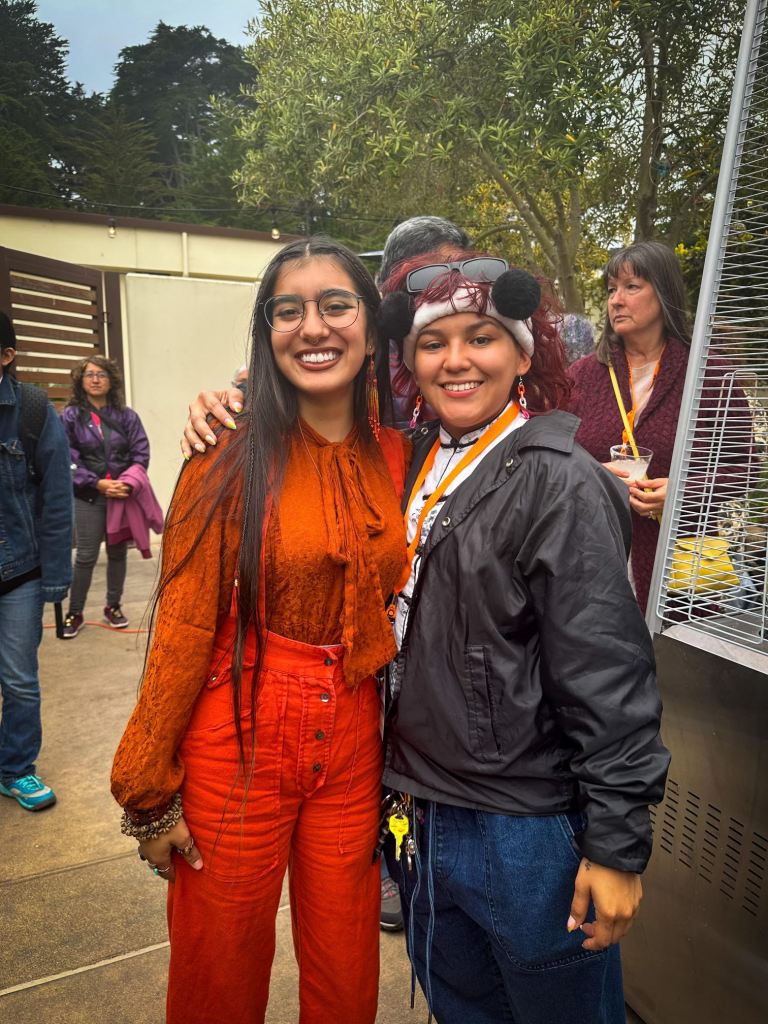
“Sometimes you may still be living at home with family, you may or may not be out to them,” said Lim. “I hope that the screening and the film festival experience is transformative not just for (the filmmaker), but also for their family.”
“Where I Unpack,” a short film created by Chey Yen, reflects Lim’s wishes. Yen, a queer and trans Chinese American, was turned away from their family when coming out to them. Yen moved from the Richmond District across the country and for years avoided coming back to San Francisco. As time passed, Yen’s parents grew in love and understanding, and seated in the front section of the festival theater were a row of similar faces of family shown in the film.
These artists, including Yen, found a source of enduring support in QWOCMAP to authentically express their stories, Lim said. She found optimism in a future where mainstream media embraced more diversity, equity and inclusion while repeating its long way coming.
“It’s been really, really hard work,” Lim added. “But really gratifying and rewarding.”
Categories: LGBTQ


 Richmond Review/Sunset Beacon