
By Clarisse Kim
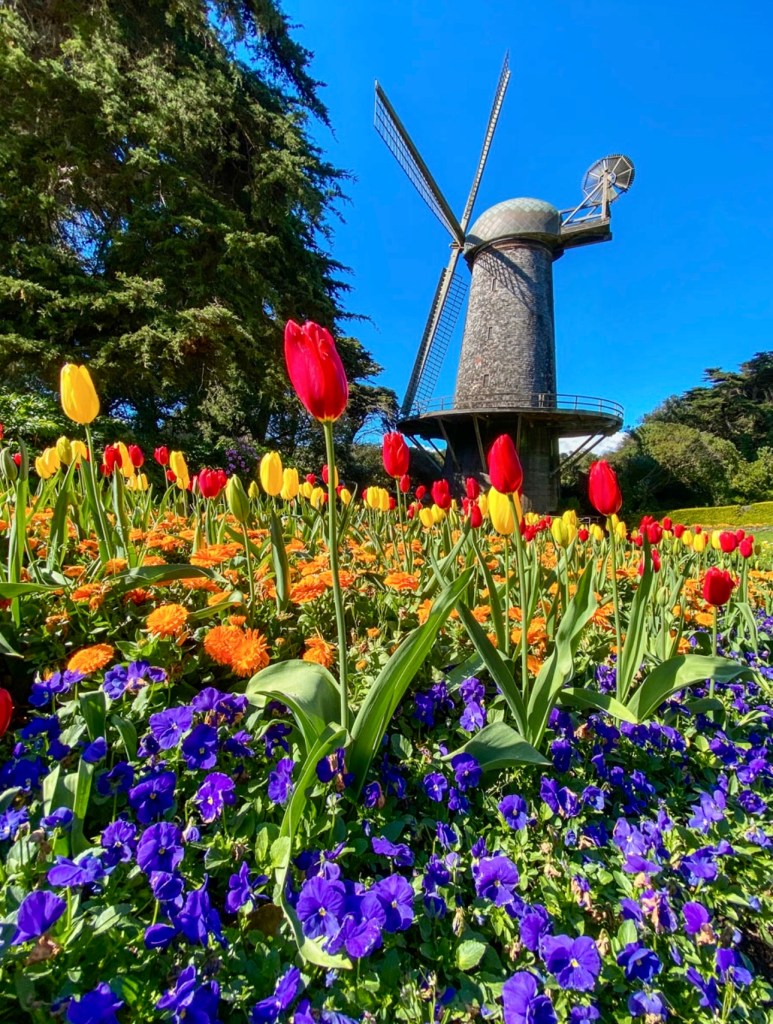
They look like two huge monsters with four arms each. The Dutch and Murphy windmills stand more than 100 feet tall and look like they are guarding the western end of Golden Gate Park.
They have seen more than a century of SF’s history; this year, the Dutch Windmill will turn 120 years old, and the Murphy Windmill will turn 115.
These birthdays have not gone uncelebrated. The Western Neighborhoods Project (WNP) is a nonprofit that preserves, interprets and shares the diverse history and culture of San Francisco’s west side. On June 16, the organization hosted an event to showcase the windmills’ rich history.

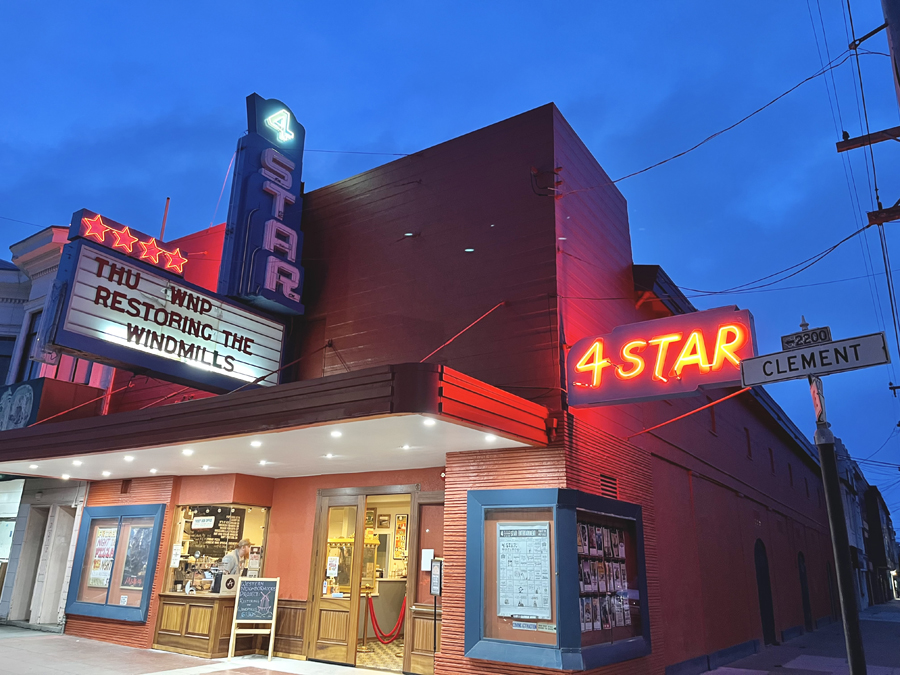
Held at the 4 Star Theater in the Richmond District, the program began with a panel featuring exhibit curator and WNP board member Lindsey Hanson, as well as historians/writers Rose Marie Cleese and Don Propstra. A discussion followed Hanson’s exhibition project, which consisted of an article and window display about the story of the two windmills.
According to WNP’s Executive Director Nicole Meldahl, the window exhibits are a WNP tradition. About twice a year, the staff turns the front windows of its clubhouse on Balboa Street near 17th Avenue into a different historic display. As the latest curator, Hanson transitioned her research on the windmills into what Meldahl said was an “exceptionally dynamic” exhibit.
“There are animatronic features, informational panels and blown-up photographs,” Meldahl said. “It’s amazing.”
During the panel discussion, Hanson described her approach to organizing the windmills’ history.
“I focused on the people,” she said. “Although it was easy to find the architects or city commissioners, I wanted to find people whose stories are not often told.”
One such story is that of panelist Rose Marie Cleese and her aunt, Eleanor Rossi Crabtree. She was known for her contributions to the Dutch Windmill’s restoration. The structure was built in 1903 to irrigate Golden Gate Park.
Unfortunately, by 1913, the windmill was abandoned for electric water pumps, and was left to decay for the next few decades. However, according to Cleese, Crabtree “took it upon herself to fix the windmill.” After all, the Dutch Windmill helped her recover from polio.

“When (Crabtree) had polio, she would go to see the windmills,” Hanson said. “Watching those big sails turn around made her think of walking again. She felt a great kinship with the windmills.”
Crabtree held her first windmill campaign in the 1960s. Her efforts carried on until the 1980s and earned her the nickname “the windmill lady.”
“She was really relentless when she got into a cause, and this was one of her final causes,” Cleese said.
Armed with her story, her determination and help from the Seabees (the Navy’s construction battalion), Crabtree was able to raise enough money to cosmetically restore Old Dutch in 1981.
Another story is that of Don Propstra, one of the leaders behind the Murphy Windmill’s restoration.
“The reason I got involved was because of my family,” Propstra said. “Being Dutch is very deep in my DNA. It seemed obvious to get involved with the windmill.”
Propstra took action to save the windmill before it was permanently lost.
“In the late 1990s, that windmill had about a year or two left before it was going to fall down,” he said. “It was in dire conditions.”
His efforts centered around the renovation of Murphy’s cap, the dome-like top of the structure that can swivel to face the wind.
“We wanted to take the cap off of Murphy and airlift it to the Netherlands,” he said. “We wanted it to be restored authentically, by a Dutch windmill builder.”
Propstra pitched this idea to the SF Recreation and Park Department, which supported his story and asked him to form a committee. Over the next few years, he gathered volunteers and raised funds for the renovation. By 2011, Murphy Windmill was extensively restored.
“On the day we lifted the cap off and sent it to the Netherlands, we had 26 different news outlets out there for the ceremony,” Propstra said. “This G-rated project got enormous attention. It was a serendipitous experience.”
WNP’s Director of Programs Chelsea Sellin ended the presentation with a film screening of “A Jitney Elopement,” a Charlie Chaplin film featuring cameos of the Murphy Windmill.
“The event was great!” Meldahl said. “We sold a majority of our tickets; the conversations were great and we all had fun.”
Meldahl said WNP also coordinates other history projects, such as community groups and a weekly podcast. The nonprofit also manages the OpenSF history program, an online archive containing more than 50,000 old San Francisco photographs.
Regarding WNP’s future projects, Meldahl revealed that Hanson will be spearheading a similar window exhibit and live program about the Alexandria Theater in the fall. Overall, Meldahl wants WNP to stretch the boundaries of traditional history by highlighting diverse stories and by using art to connect with the community.
“We want to meet the community where they’re at,” Meldahl said. “I hope that we keep opening the doors of history in every possible way.”
Categories: History


 Richmond Review/Sunset Beacon