
Vegan Kadhi with Butternut Squash
By Shanta Nimbark Sacharoff
Kadhi is a North Indian soup that is prepared with a variety of methods, with one common denominator; it is always made with yogurt and besan (garbanzo or chick-pea flour).
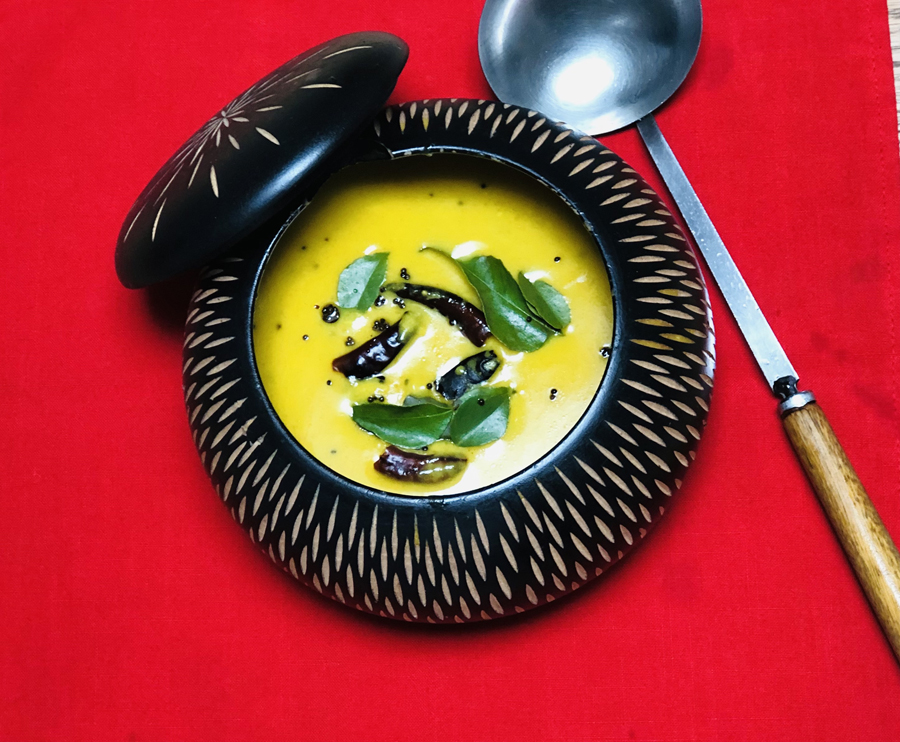
Not to be confused with the word “curry” (hardly ever used in Indian vocabulary) which encompasses any meat- or vegetable-based stew, kadhi is a comfort food often served with the wholesome porridge called khichadi. Khichadi is a nourishing dish made of short grain brown rice cooked with split mung beans. In fact, the oldest man in my Indian village attributed his good health to a diet that included khichadi in every supper.
In this recipe, I have modified the traditional kadhi by replacing dairy yogurt with coconut yogurt as I have learned to modify dairy recipes for those who cannot tolerate or need to avoid dairy. Also, I have embellished this kadhi with the colorful and seasonal butternut squash.
In addition to being colorful, the butternut squash adds some nutritious components to this hearty soup. One cup of this squash provides us with our daily requirements of more than 100% of vitamin A, 40% of vitamin C, 10% of various B vitamins, 15% of magnesium, 12% of potassium, 13% vitamin E and 7% of calcium. This amount of squash provides us 2 grams of protein while containing only 82 calories. So, this squash is definitely a super food!
Ingredients:
1 small butternut squash or a portion of a big squash
(about 2 to 3 cups after cutting into small chunks)
4 to 4 ½ cups water
1 cup coconut yogurt blended with 2 to 3 tablespoons of water
1 tablespoon garbanzo flour (or white flour)
2 smashed cloves garlic, crushed with ¼ teaspoon cayenne with a rolling pin or a mortar/pestle
½ teaspoon cumin powder
½ teaspoon coriander powder
½ teaspoon turmeric powder
½ teaspoon salt or to taste
1 to 2 tablespoons freshly squeezed lemon or lime juice
1 teaspoon sugar (optional)
For the vaghar:
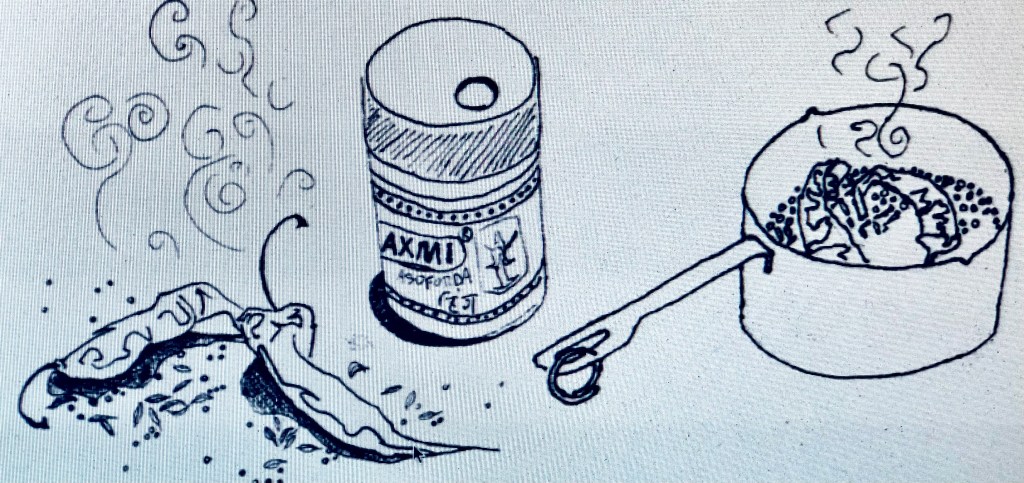
2 teaspoons cooking oil
1⁄2 teaspoon black or brown mustard seeds
2 whole dried red chili peppers, broken into halves
A pinch of hing (asafetida) optional if available
For garnish:
8 to 10 whole curry leaves (sweet neem) available at Indian grocery stores
or 1 tablespoon chopped cilantro leaves
First, cut the squash into half. (If the squash is big, you will only need half). Then remove the seeds and fibers and rinse the squash. Next, cut this big portion of squash into six or eight 3- to 4-inch chunks. Place the chunks into a sauce pan with 4 to 4½ cups of water and boil them for 5 minutes to loosen their skin enough to peel but to keep the pieces firm. (Alternatively, you can peel the big chunks first before boiling but they are easier to peel after cooking). Using a slotted spoon, take out the boiled chunks and place them in a bowl of cold water to cool them for a few minutes. Save the stock. Peel the chunks using a paring knife. Cut the chunks into smaller pieces and return them to the pot of stock. Return the stock and squash to a full boil, and without closing the pot with a lid, cook the squash for 5 to 8 minutes, until the squash pieces are very soft.
Next, whisk the coconut yogurt with 2 to 3 tablespoons of water and besan. Remove any lumps. Place squash chunks with their stock and the coconut yogurt/besan mixture into a bowl of an electric blender to puree the ingredients into a thin soupy consistency. Put the soup back into the pot and start simmering over a very low heat for 10 to 15 minutes. Stir the soup frequently, or else the liquid will boil over.
While the soup is simmering, make the garlic/cayenne paste by crushing them together using a rolling pin or a mortar and pestle. Add only ½ teaspoon of this paste to the soup. (The rest can be refrigerated to flavor other dishes later). Add the salt, cumin, coriander, a tablespoon of lemon or lime juice and the optional sugar. Whisk the simmering soup to blend the spices well. Continue to cook the soup over a low heat, stirring frequently, while preparing for the vaghar step (loosely translated as “tempering”) which gives Indian soups a unique smoky flavor. The soup should be reduced to a quart by now. Obtain the desired texture by adding a bit more water for a thinner soup or cooking a little longer to thicken the soup. Adjust the flavors by adding more salt, cayenne paste, lemon/lime juice and/or sugar.
For the vaghar step, open the soup pot, and keep the lid nearby. Then, heat a tablespoon of oil in a very small pot, such as a butter warmer or a metal measuring cup. Add the mustard seeds. When they begin to pop, add the dry chili pieces and let them get hot for a minute. Then add a couple pinches of hing and quickly pour the smoky hot oil into kadhi and cover with the lid immediately, so that the hot vapor remains trapped in the pot. Turn off the heat and keep the lid covered for at least five minutes. Uncover the pot, correct seasoning and garnish with the curry leaves or cilantro. When serving the soup, keep the chili pieces floating on top, but instruct the diners to remove them before eating as they are very spicy.
Makes four to six servings.
Recipes by Shanta Nimbark Sacharoff, copyright 2023. Shanta is a Sunset resident and the author of “Cooking Together” and “Flavors of India,” available at Other Avenues Food Store at 3930 Judah St. Shanta writes recipes and articles on food and nutrition. She teaches vegetarian and vegan cooking classes at her home and gives cooking demonstrations for the public at SFPL branches frequently which you can find by viewing San Francisco Public Library’s event page. You can also view her recipes via videos on YouTube by clicking Shanta Nimbark Sacharoff’s YouTube videos.
Categories: Cooking Together


 Richmond Review/Sunset Beacon