
By Thomas K. Pendergast
Two longtime Sunset District businesses – an ice cream shop and a gallery specializing in the works of women artists – now share the distinction of the City honoring them as “legacy” businesses.
The Legacy Business Program of San Francisco’s Office of Small Businesses has designated Polly Ann Ice Cream on Noriega Street and San Francisco Women Artists on Irving Street with the title after being recommended by District 4 Supervisor Joel Engardio and District 7 Supervisor Myrna Melgar.
According to the Legacy Business Program, the designation is given to businesses that have been open for at least 30 continuous years. The business also must have impacted San Francisco’s identity and must be dedicated to keeping its traditions alive. The program was created in 2015 to support historical businesses; members can receive grants, business and marketing help as well as recognition from the City.
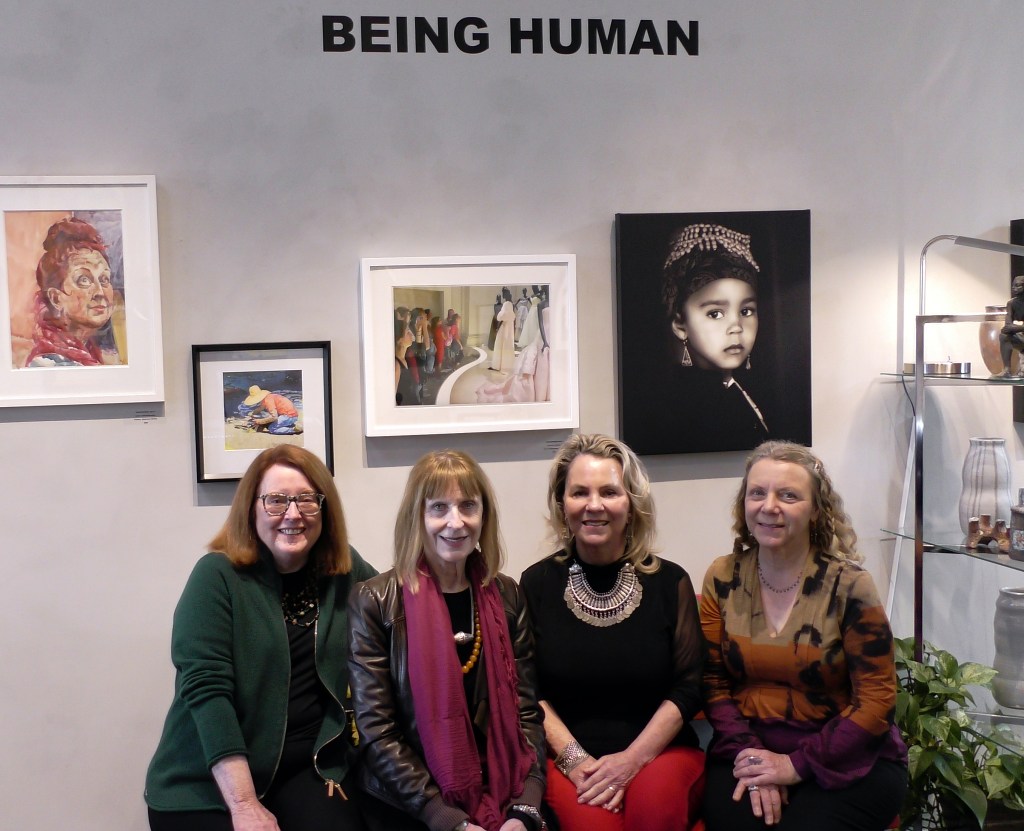
“San Francisco Women Artists (SFWA) is a nonprofit arts organization that maintains a gallery of contemporary art, hand-crafted jewelry, sculpture and ceramics,” according to city documents. “Their mission is to be a presence in the San Francisco arts community that supports, empowers and expands representation of women in the arts and to encourage a diversity of aspiring artists at all states in their careers.”
Officially established in 1925 as the Society of San Francisco Women Artists, SFWA has roots going back to 1887 and the Sketch Club, an organization established by a group of independent women who met regularly to share and critique each other’s work and to counter the all-male Bohemian Club.
It held its first exhibit as such in 1926. Twenty years later, they dropped “society” from their name and then became a nonprofit organization in 1952.
It has moved around locations a few times since then, settling at their current Inner Sunset location in 2015.
“One of the reasons that (the Sketch Club) developed their group was to have support,” Gallery Director Janice Rumbaugh said. “Women were not allowed to go out and paint without being accompanied by a male member of their family and these women were joining together and they were going on trips to Monterey and painting in the sand dunes, kicking their shoes off … building community and so they were joining together.”
“It’s been a long, hard road for women artists,” Vice President Mary Lou Licwinko said. “And even into the ’50s and ’60s, still the art world was dominated by men. Through this organization, a lot of famous women artists have developed: Ruth Asawa, Imogen Cunningham, and this was the first place that showed Frida Kahlo as an artist separate from her husband.
“It continues to be a struggle for women to be in the artist limelight,” Licwinko said. “It’s very important for San Francisco, a city that prides itself on diversity and equality and inclusiveness. It’s really important that we have a gallery that supports women artists.”
One of the things Board President Pam Borrelli likes about the gallery is giving opportunities to aspiring women artists who are having their first exhibitions.
“They are so proud to actually sell something,” Borrelli said. “It gives them confidence and a sense of credibility.”
She explained that they try to focus on bringing in new artists so they can encourage them and show their work.
Like Beth Cataldo, who came from a photography background and became a member in 2017 after she retired.
“I really look forward to getting feedback about my art but also seeing other people’s art. So we do openings every month and at the openings new artists come, old artists come and it really is like gathering around and having conversations about life but also about our art,” Cataldo said. “There’s a call-to-artists every month and that deadline drives me to create more art because … it does add some discipline to what could otherwise be this very undisciplined life, after I retired. It definitely creates this organization that I follow, like every month I have an idea to think about in terms of my art.”
They appreciate the City acknowledging their work with a legacy business status.
“We’re tremendously honored,” Borrelli said. “We’ve gotten a lot of congratulations and feedback. To help it bring more visibility and awareness to our gallery is going to be really significant. We hope more people will learn about our long history and what we do to support women artists and Bay Area artists in general, because we do celebrate men’s art also.”
Polly Ann Ice Cream
Polly Ann Ice Cream in the Outer Sunset was first established in 1955.
“The business has been a community gathering space for multiple generations,” according to city documents. “They are known for their unique adaptations of international desserts into ice cream flavors such as brigadeiro, dulce de leche, ginger milk and Turkish coffee.
“They are also known for Asian ice cream flavors, such as durian and lychee.”
Always in the same location, over the years it has gone through a number of owners, the latest being Alex Viafara, a Columbian immigrant trained as a manufacturing engineer who spent five years in Brazil before coming to San Francisco.

In fact, it was while he was sitting in a university engineering class that he was first inspired to sell ice cream.
“Someone said something about being happy and then the teacher said, ‘If you want to make people happy, then just sell ice cream.’” Viafara said. “He was being sarcastic but actually, I said, ‘You know what? That makes sense to me.’”
“I always loved ice cream and when I moved to Brazil I started at home doing recipes with my mom, spending a lot of time with her when she went there to visit me,” he explained. “And one of our hobbies was to make ice cream during the weekend. Like, spend the whole day making ice cream at home with the freezer.
“But then I started to realize that I like that and that I could make very good flavors even at home. And I said, ‘One day I’m going to open my own store.’”
Eventually he worked for a glass manufacturing company and relocated to Tracy, California.
In 2021, during the pandemic, he decided to take the risk of buying Polly Ann Ice Cream when it went up for sale.
“I didn’t really spend time trying to make up my mind if I would get it or not,” he said. “I called the broker, the Realtor, and said ‘You know what, I just want that place. I will just have it.’ And then I acquired it. It didn’t take long since they showed that it was on sale.”
Viafara derives great satisfaction from his neighbors’ appreciation of his business.
“I’m really in love with this community because the people are very nice, polite; you see in the comments that people say about our store and when they come here and then when they share their stories, like, ‘Oh, I used to come here as a kid and now I’m coming with my grandson.’ That’s so lovely.”
Sometimes dogs will be just walking by and they just stop in front of the doorway and don’t move.
“They just stop there, and we know that they want ice cream,” Viafara said. “And then we just have it ready for them. Sometimes the owner says ‘it’s fine’ and the dog wouldn’t move. Then we just give them the ice cream and after that they walk. Everything is so nice here.”
This happens maybe every couple of weeks, he said, and they always get vanilla.
“That is not new. It was new for me that the dogs would do that but that’s something that the store has always done for the dogs,” he said.
One night there was a strong storm that knocked the doors to the store open.
“There was this neighbor that called the police and they waited for me here until I arrived because the doors were open,” Viafara said.
One of his most satisfying personal rewards comes from introducing new flavors.
“When I come up with new flavors and people like those flavors; I can see in their reactions that what I did is worth it,” he said.
“You can see that in their eyes and in their happiness,” Viafara said. “Ice cream is always to be happier. And what I tell my team here; I say ‘look, people, they don’t come here because they are hungry. They come because they want to be happy.’ That’s it. That’s the point. So we need to help them with that, specifically.
“So, that’s what we focus on. That specific moment has to be happy for them,” he said.
Categories: Business


 Richmond Review/Sunset Beacon