
By Noma Faingold
Director Bess Kargman knew going in that prolific songwriter Diane Warren, the subject of her latest documentary, doesn’t fully trust anyone.
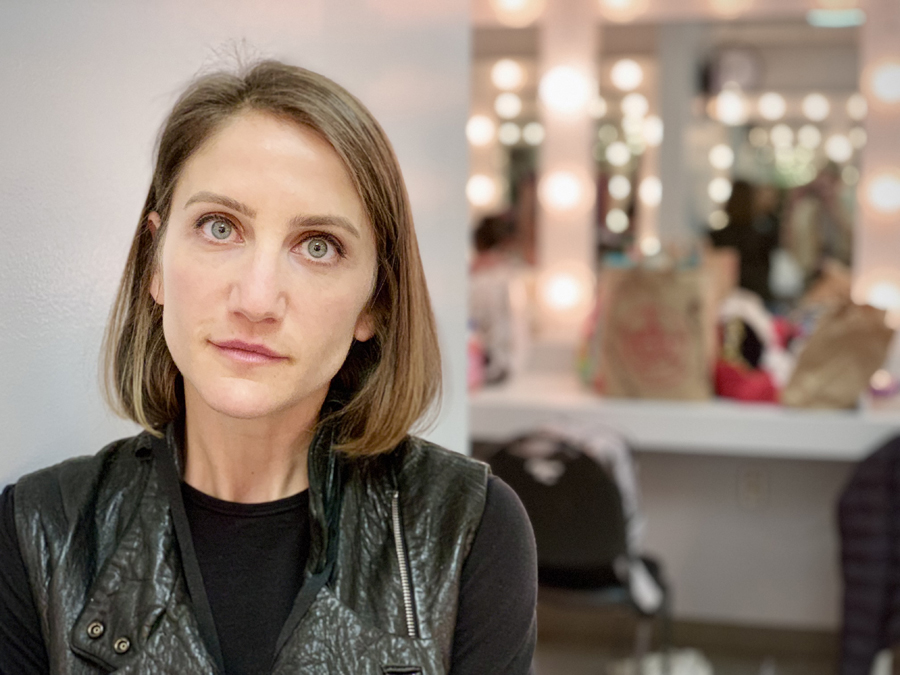
“It’s not in her nature,” Kargman said. “The biggest challenge was earning her trust. I had to navigate when to push her. She would get really anxious sitting in a chair too long and being away from her work.”
Warren has written virtually all of her 400-plus songs alone, including major hits, “Rhythm of the Night,” (DeBarge 1985), “Nothin’s Gonna Stop Us Now,” (Starship 1987), “If I Could Turn Back Time,” (Cher 1989), “Because You Loved Me,” (Celine Dion 1996), “Unbreak My Heart” (Toni Braxton 1996), “I Don’t Want to Miss a Thing” (Aerosmith 1998, from the film “Armageddon”), “I Was Here” (Beyonce 2011) and “Til It Happens to You” (Lady Gaga 2015).

The documentary, “Diane Warren: Relentless,” being screened on Aug. 3 at the Piedmont Theatre during the 44th San Francisco Jewish Film Festival July 18-Aug. 4, manages to capture the enigmatic, driven, self-taught talent by displaying her many facets with nuance – her flippant sense of humor and single-minded work ethic, along with all her dichotomies.
For example, Warren has unwavering self-belief, yet she looks for outside reassurance about her work. Being nominated for 15 Oscars for Best Song, but losing each time, will do that to anyone. She was finally awarded an honorary Oscar in 2022, the first bestowed by the Academy’s Board of Governors to a songwriter. It was one of the happiest days of her life.
She deeply loves animals, yet avoids romantic entanglements. Somewhat ironically, Warren’s most successful power ballads are about love. She acknowledges that her fertile imagination feeds the material. In “Relentless,” Paul Stanley of Kiss said, “It’s easier to write about heartache when you don’t have to live it, but you fear it.”
According to Warren, her relatable lyrics take shape by making herself the main character of a song.
“She doesn’t seek romantic love, but she taps into that part of herself of deep, meaningful relationships and puts it into her work,” Kargman said. “Diane taught me you can use your imagination and everything around you. Her wheels are always turning. Diane can’t really shut off her creative mind … ever.”
The extremely disciplined Warren, 67, shows up for work every day to the Los Angeles building she owns housing her Realsongs publishing company and studio. The public spaces have an industrial, artistic flare and are welcoming. However, the work spaces where she creates, are a disaster. Papers are in piles all over the floor, covering almost every surface, along with old newspaper clippings, outdated landline phones and cassette tapes. Mismatched floor lamps are randomly placed around the room. A couple are tipped over. There’s a Post-it Note on the wall that reads, “Don’t clean in here Thanx.”
The space she named “The Cave” is where all the magic happens. She superstitiously believes changing one thing could ruin everything she has built over the last 35 years.
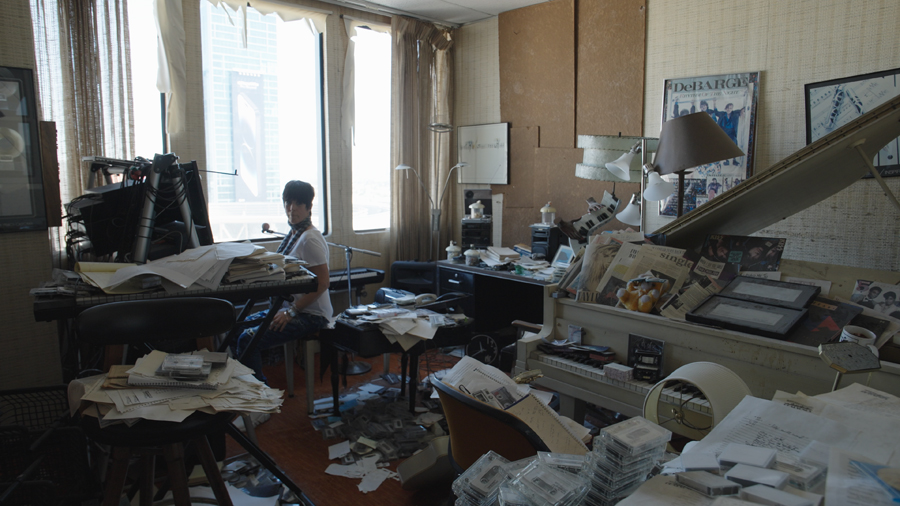
“She’s like a hoarder, but she doesn’t need an intervention,” Kargman said. “The only stuff she hoards is related to her music.”
Warren hates the idea of revealing her songwriting “process,” comparing it to being filmed having sex.
On the other hand, she let Kargman shoot several intimate, vulnerable moments, including a major personal loss. Warren also matter-of-factly talked about being on the Asperger’s spectrum. All Warren asked of Kargman was that the documentary show Warren’s wicked sense of humor.
“The only promise she asked of me was to make it funny, because she is funny,” Kargman said. “To her credit, she didn’t want a puff piece. She wanted warts and all.”
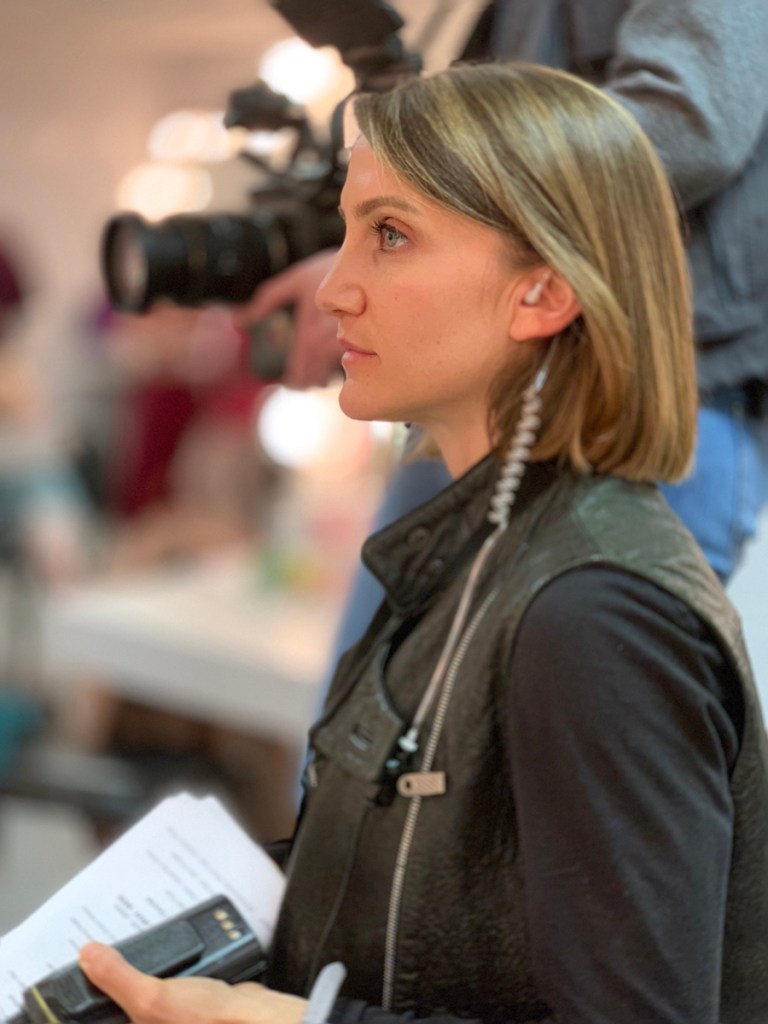
As a filmmaker, Kargman, best known for the 2011 documentary, “First Position,” which is set during a youth ballet competition, sought to “show Diane’s world and all its complexities. There is no one like her,” Kargman said. “I wanted the audience to experience that. You’ve gotta make them laugh and you gotta make them cry.”
Warren grew up in a middle-class Jewish household in Van Nuys, California. She developed an obsession with music as a pre-teen. She idolized the Beatles. She studied the Billboard charts. In school, she was a terrible student. While she didn’t respond well to guitar lessons, she was able to learn to play piano and guitar on her own. She couldn’t really sing but continued to plug away at songwriting. She didn’t want to be a star. She did, however, want her name between the parentheses on 45s. She had no connections in the music business but she was determined to find her way in.
In the last three decades, she has become one of the most commercially successful songwriters who ever lived, with a publishing company valued at $500 million.
“There was no Plan B. I don’t know how to do anything else,” Warren said in the doc. “This isn’t a job. It’s my life. You can’t retire from your life.”
Growing up, her father was somewhat supportive, but her mother discouraged her at every turn. She was exiled to the metal shed in the backyard to create because no one at home was particularly tolerant to the repetitive methods of Warren’s songwriting process.
Not surprisingly, she was rebellious. She ran away from home for a short time and did drugs. Those episodes hardly derailed her from her deep immersion in music. She developed her relentlessness during her pre-success years. Her go-to attitude became, “F–k you. I’ll prove you wrong,” as Warren said in the film. “My mom was the first one I had to do that with.”
Indeed, in archival snapshots shown in the doc, it was like a montage of Warren’s seemingly favorite pose of flipping the bird.
“She’s a mother—er. My kind of girl,” said producer/songwriter Quincy Jones, one of the many significant artists and executives interviewed in the film, who have worked with Warren, including Cher, Clive Davis, Jerry Bruckheimer, David Foster, Common and Jennifer Hudson.
“Music was saving my life every day and to this day,” Warren said in “Relentless.”
No matter how the music industry evolves or devolves and, as the trends come and go, Warren keeps writing songs with the goal of her work being genre-less and timeless. And, in her own mind, she’s only as good as her latest creation.
As good friend Cher said at the beginning of the film, “She’s crazy but she writes great songs.”
The 91-minute film “Diane Warren: Relentless,” which took nearly three years to make, had its world premiere in March at South by Southwest (SXSW), the annual event held in Austin, Texas, that showcases film, music and interactive media. The doc has been sold and will have theater distribution, prior to streaming. Release dates have yet to be announced.
Kargman, a former dancer and collegiate athlete, is originally from the Boston area. She earned degrees from Amherst College and the graduate program at the Columbia School of Journalism. For the last 10 years, she has lived in Los Angeles with her husband and two children.
Warren and Kargman hit it off right away.
“I’m not a genius or on the spectrum but we are pretty similar,” Kargman said. “We both have a foul sense of humor and have extreme pride in our work. We are both Jewish and we bonded over that in the first five minutes. We are both determined Jewish women, who have an appreciation for designer shoes. Can you imagine a non-Jewish dude doing a film about Diane?”
Kargman kept a professional distance while filming, describing the shooting schedule as “swooping in and out of Diane’s life.” She declined all of Warren’s invitations to social events, unless she could bring her camera. “Now I will nurture that friendship,” she said.
Director and co-producer Kargman is satisfied that she accomplished what she set out to do in shaping Warren’s journey as an underdog, trauma survivor and a unique creative force. The moment Kargman knew she had earned Warren’s respect, if not trust, came immediately after the screening at SXSW. Before the two of them went on stage for the audience Q&A, an emotional Warren said to her, “You made me cry, you f—ing bitch.”
The documentary, “Diane Warren: Relentless,” will be screened on Aug. 3, at 3:30 p.m., at the Piedmont Theatre, (4186 Piedmont Ave., Oakland) during the 44th Annual San Francisco Jewish Film Festival, July 18-Aug. 4. Information and tickets: https://jfi.org/sfjff-2024.
Noma Faingold is a writer and photographer who lives in Noe Valley. A native San Franciscan who grew up in the Sunset District, Faingold is a frequent contributor to the Richmond Review and Sunset Beacon newspapers, among others. She is obsessed with pop culture and the arts, especially film, theater and fashion.
Categories: Overtures and Undertows


 Richmond Review/Sunset Beacon