
Gado Gado: Indonesian Salad with Tempeh and Vegetables
By Shanta Nimbark Sacharoff
Gado gado (meaning “mix-mix”) is a traditional Indonesian salad made with a variety of vegetables and a protein element from tempeh, tofu or boiled eggs. It is served with freshly made peanut sauce dressing. Gado gado is versatile, healthy, colorful and tasty!
Usually, gado gado is made with raw and lightly cooked vegetables and served at room temperature which is appropriate for a hot climate. However, my friend, Adjat, who taught me this recipe transformed the dish to suit the cool weather of San Francisco. He stir-fried the vegetables briefly and served them on a bed of cooked rice with the peanut butter sauce drizzled all over. So, here is a not-so-traditional but equally delicious warm gado gado. Enjoy!
For the sauce:
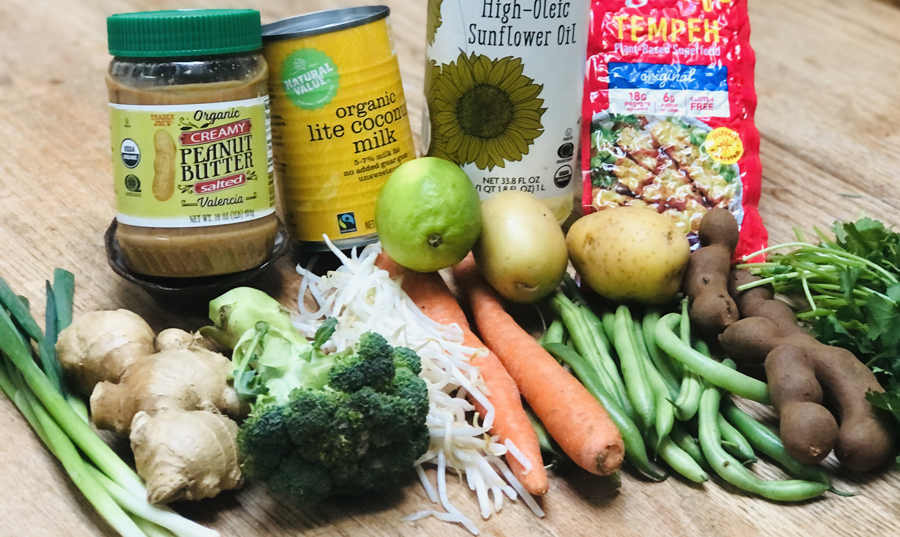
¼ cup unsalted crunchy peanut butter
1 tablespoon finely shredded or minced fresh ginger root
2 tablespoons Ketjap Manis (Indonesian sweet soy sauce)
2 to 3 teaspoons sambal oelek (Indonesian red chili paste)
1 tablespoon or more tamarind paste diluted in ¼ cup of water
1/2 cup coconut milk (low fat or full fat)
¾ cup or more water
For the Vegetables and Protein:
1 cup yellow potatoes, cut into cubes after peeling and par-boiled for 10 to 15 minutes
1 cup trimmed green beans cut into 2” pieces blanched for 3 to 5 minutes
1 cup broccoli cut into florets after removing stems, blanched for 3 to 5 minutes
1 cup carrots cut into sticks
1 cup mung bean sprouts
2 to 3 tablespoons of mild cooking oil, such as sunflower seed or corn oil
½ cup or more scallion chopped finely with their greens
Juice of one lime freshly squeezed
Salt to taste
1½ to 2 cups tempeh cut into thin strips
For the Bed of Rice
4 cups of cooked rice
For the garnish
½ cup chopped, fresh cilantro leaves for garnish
First, make the sauce. This step can be done hours or even a day ahead of time. In a sauce pot, combine all ingredients listed for the sauce. Blend well using a whisk to break lumps and cook over a low heat for 10 to 15 minutes to form a thick but pourable sauce, adding a bit more water if needed. Set the peanut sauce aside.
Then, cook the rice using your favorite recipe or a rice cooker. Set the rice aside.
Next, prepare the vegetables as listed. Par-boil potatoes, being careful not to overcook. Drain and set them aside. Blanch (boil briefly 2-3 minutes) the green beans and broccoli, remove from the water and set them aside. Cut the carrots and rinse the bean sprouts. Sprinkle some lime juice all over the vegetables and set them aside.
Spread a tablespoon of oil in a skillet and pan fry the tempeh slices turning over once to cook on both sides. Set them aside.
Using a wok or a frying pan, stir fry the green onions for a minute and then add the potato cubes and carrots. Stir fry them together for 1 or 2 minutes. Next add the broccoli and green beans and sauté them together for 2 more minutes. Set the wok fried vegetables aside.
Assemble and serve the gado gado in either of the two ways as described below.
1. Divide the rice into four large bowls and spread the wok-fried vegetable on top. Next, drizzle the reheated peanut sauce on top. Garnish with chopped cilantro and serve.
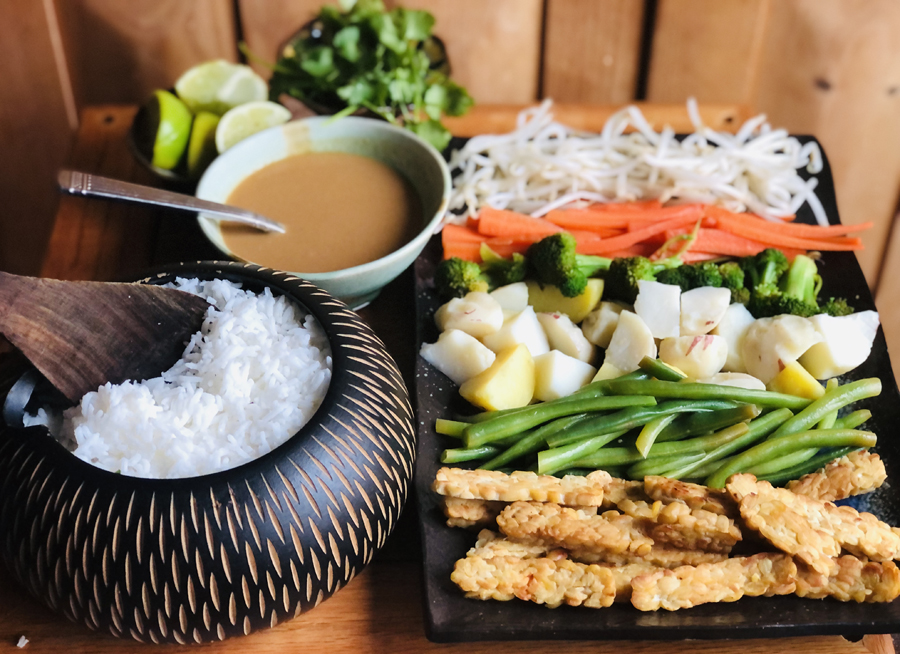
2. Put the blanched vegetables on a platter, the rice in a large bowl and the sauce in a small bowl, and place them on the dinner table. Allow the diners to combine all the elements from the table as they like.
Recipes by Shanta Nimbark Sacharoff, copyright 2024. Shanta is a Sunset District resident and the author of “Cooking Together” and “Flavors of India,” available at Other Avenues Food Store at 3930 Judah St. Shanta writes recipes and articles on food and nutrition. She teaches vegetarian and vegan cooking classes at her home and gives cooking demonstrations for the public at SFPL branches frequently which you can find by viewing San Francisco Public Library’s event page. You can also view her recipes via videos on YouTube by searching Shanta Nimbark Sacharoff’s YouTube videos.
Categories: Cooking Together


 Richmond Review/Sunset Beacon