
By Nicholas David
Westside voters may soon determine the composition of the United States House of Representatives – or, at least, one 435th of it.
Speaker Emerita Nancy Pelosi will not be seeking reelection next year. Her retirement marks the end of a political era for San Francisco – every two years since 1987, the city’s voters have re-elected Pelosi into the House of Representatives.
Before Pelosi’s official announcement, progressive organizer Saikat Chakrabarti and State Sen. Scott Wiener launched campaigns for her seat. Now, also vying to represent California’s 11th district in the federal legislature is District 1 Supervisor Connie Chan.
“It is going to be very difficult to fill (Pelosi’s) heels,” Chan said with a laugh. “There’s no doubt about that.”
Chan said that her experience in City Hall has prepared her for an office on Capitol Hill, citing her advocacy work and current positions as supervisor and chair of the city’s Budget Committee. She has found something of an ally in Mayor Daniel Lurie, despite major political differences.
“I know I can bring that very same experience and skill set to D.C., to maneuver and to make sure that we protect San Francisco values, but also bring back the resources that the city needs,” she said.
Chan has held her current position on the Board of Supervisors since 2020, when she narrowly won the seat. The decision to run for congress, she said, was spurred in part by actions of “the Trump administration 2.0.” She cited items of concern like President Donald Trump almost siccing the National Guard on San Francisco in October, along with making federal cuts to SNAP (formerly called food stamps) and Medicaid benefits.
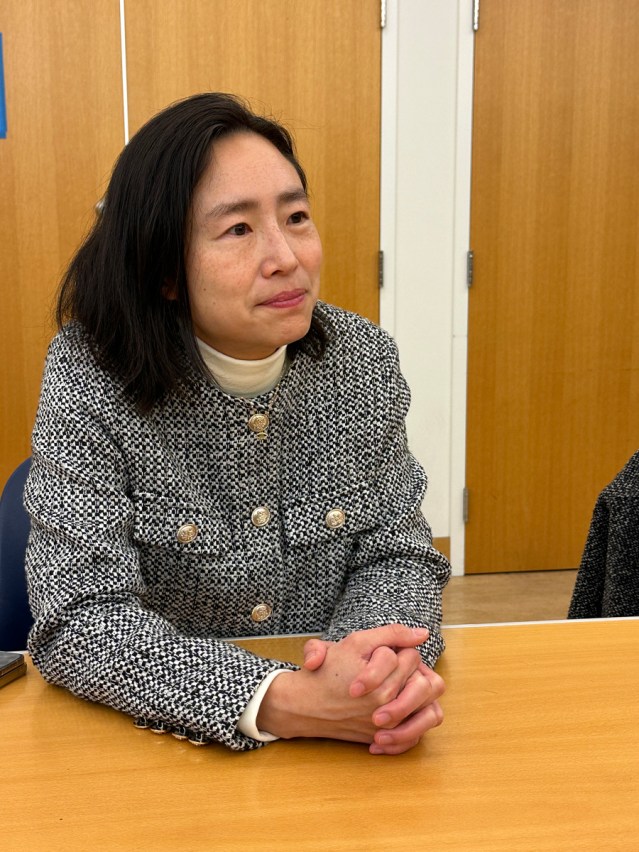
Among Chan’s policy concerns are hyperlocal issues like upzoning and the seemingly inescapable Upper Great Highway debacle, but also concerns of more international significance like affirming the sanctuary city status and ensuring paths to citizenship. Nationally, she sees value in a strong working class.
“I really firmly believe that the labor movement is what can really bring the United States, not just in San Francisco and California, but across the country, to a better direction,” Chan said. “When people have a fair wage, safer working environment, all those things are critical to economic growth.”
Much of Chan’s platform concerns reinvigorating social programs. She called for the expansion of housing, healthcare and education programs, which have all seen budget cuts under the Trump administration. Locally, she touted San Francisco’s free City College program, suggesting that it could be a “national model.” Chan also said she supported free Muni for youth, which is in effect now, and would support a free Muni system for all.
“The best way to fight Trump and the Trump administration’s cruel policies is by delivering affordability to San Franciscans,” Chan said.
The language of affordability can be seen as that of a younger, more progressive branch of the Democratic party – one which has worked to distance itself from a generation of powerful liberals before them – represented in no small part by the recent mayoral election of Zohran Mamdani in New York City. Here, on one hand, Chan may run the risk of isolating certain moderate members of the Pelosi voting bloc, sending them to a candidate like Scott Wiener; on the other, former Alexandria Ocasio-Cortez Chief of Staff and Green New Deal author Saikat Chakrabarti has had several months’ head start in canvassing as a progressive outsider.
A coalition of Chan voters is staking up that may include working people, immigrants and the upper class. Chan toes the line, and has not been so quick to oppose more established Democrats. She said she finds some “commonality” between Pelosi and herself.
“She was at a very similar age when she ran for this seat, and also a mom, and a woman, but at the same time I am different,” Chan said. “I am a first-generation immigrant. I am Asian American.”
While Pelosi was born into a political family, Chan was born in China and moved with her family to San Francisco’s Chinatown as a child. Chan also pointed to political differences between herself and the Speaker Emerita.
“I have a record that I can point to,” Chan said. “Not only have I been fighting for progressive values, but also I have been delivering solutions.”
Voters may see a stacked ballot next year so as to draw voters out to the polls. Two of the most contentious westside issues – reopening the Upper Great Highway to cars and neighborhood upzoning – may be on the table.
“The west side are saying that closing the Great Highway is making their daily lives difficult,” Chan said. Similar concerns over daily life and affordability, she added, frame the upzoning discourse.
“It’s the tenants and small businesses worrying about being able to stay where they’re at and being priced out and evicted by speculative real estate investments,” she said. Chan did not say whether she had any plans to introduce propositions to next year’s ballot.
“I’m going to support our stakeholders and our community decisions, should they decide that these should be the issues that go on to the ballot in 2026,” she said.
While campaigning, Chan will continue to work as District 1 Supervisor.
“The most critical piece is having a great team,” she said of managing both the job and campaign. “That is really what any leader should do – to be able to walk and chew gum at the same time.
She hopes that her time in City Hall has proved her ability to represent San Francisco in congress.
“I think the Richmond have seen it firsthand and know(s) this, that I am not to be underestimated, but I often am,” Chan said, pointing to what she called “sexist and racist attacks” in previous election cycles. “I am resilient. I am often being underestimated, but again we’re here, we prevail each time, and I am confident that this time will be no different.”
Categories: Politics


 Richmond Review/Sunset Beacon