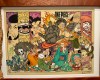
Manga has a rich past, a phenomenal present and perhaps, a transformative future. The Fine Arts Museums of San Franciso recognize the current zeitgeist by presenting the “Art of Manga,” the largest manga exhibition ever staged in North America.

Manga has a rich past, a phenomenal present and perhaps, a transformative future. The Fine Arts Museums of San Franciso recognize the current zeitgeist by presenting the “Art of Manga,” the largest manga exhibition ever staged in North America.

“I think in clay. Clay was the earth that grew our food, was the house we lived in, was the pottery we ate out of and prayed with,” Simpson told a de Young Museum audience at a very personal lecture she delivered earlier this year. “My relationship to clay is ancestral and it has a deep genetic memory. It’s like a family member for us.”
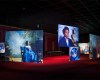
Watching the 28-minute, 10-screen film/art installation, “Lessons of the Hour,” by British artist/filmmaker Sir Issac Julien, is not as overwhelming as one might think. In fact, the flood of images, sounds and words dedicated to the life of writer, orator, philosopher and social justice activist Fredrick Douglass (1818-1895), a former slave, allows the viewer to absorb and interpret the immersive experience in their own way.
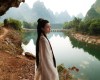
Watching the 28-minute, 10-screen film/art installation, “Lessons of the Hour,” by British artist/filmmaker Sir Issac Julien, is not as overwhelming as one might think. In fact, the flood of images, sounds and words, dedicated to the life of writer, orator, philosopher and social justice activist Fredrick Douglass (1818-1895), a former slave, allows the viewer to absorb and interpret the immersive experience in their own way.

At the height of the COVID-19 pandemic, Paul McCartney was spending time in his archives, preparing a photo exhibition of the late Linda McCartney (Eastman), his first wife. The task happened to remind him that he had taken photos during a momentous three-month period (December 1963 through February 1964), when the Beatles were on the cusp of superstardom, often referred to as Beatlemania.
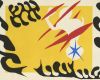
Originally, the very limited edition of artist Henri Matisse’s 1947 book of prints was going to be called, “Circus,” because the inspiration for several motifs concerned performing artists and balancing acts. However, during the two-year period of creating 20 color stencil prints (pochoirs), the title changed to “Jazz,” at the suggestion of Greek art publisher Tériade.
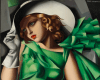
The first retrospective exhibit in the United States of Lempicka (1894-1980) will open at the de Young Museum on Oct. 12 and run through Feb. 9, 2025. The exhibition then travels to the Museum of Fine Arts in Houston, March 9 through May 2025.
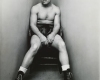
People might be aware of master photographer Irving Penn (1917-2009) having seen his austere, innovative, high-contrast black-and-white Vogue Magazine fashion spreads. Or maybe viewers have come across his bare-bones, character-revealing portraits of artists and luminaries like Truman Capote, Pablo Picasso and boxer Joe Lewis. Then there’s the pristine still life works, at times looking like representational paintings while others seem abstract.

When you think of San Francisco’s history of fashion post-1906 earthquake, what might come to mind is the free-spirited hippie era of bell bottoms and psychedelic print mini-dresses or picturing the serious, all-black outfits the Beat generation wore while listening to poetry or experimental jazz in 1950s North Beach nightclubs.
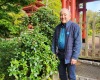
Sakatani, along with 640 other Bay Area artists, attended “artist day” at the de Young Museum, a reception staged a few days prior to the Sept. 30 opening of the de Young Open, a community-based art exhibition consisting of 883 artworks, displayed salon style from floor-to-ceiling by artists from nine Bay Area counties.
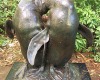
What sculpture in Golden Gate Park was made by someone accused of cheating because his sculpture was too lifelike?

The Bay Area’s beloved floral fundraiser, Bouquets to Art, returns this June, celebrating fresh summer florals in conversation with the permanent collection and architecture of the de Young museum.

“Art should show you something you’ve never seen before.” – Kehinde Wiley
Hear from the artist about his “origin story.”
Kehinde Wiley: An Archaeology of Silence. A grant from Google.org provides eight weekends of free admission and support for vital public programming, including school and youth curriculum.


 Richmond Review/Sunset Beacon