
Three history-loving teen writers will be awarded the 2020 Fracchia Prize by San Francisco Mayor London N. Breed and the Golden Gate Park walking tours they designed will be made available to the public for free.

Three history-loving teen writers will be awarded the 2020 Fracchia Prize by San Francisco Mayor London N. Breed and the Golden Gate Park walking tours they designed will be made available to the public for free.
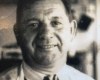
The history of Louis’ Restaurant brings a rich visual story of not just the location but also the people, friends, family, employees and even Adolph Sutro’s nephew who negotiated a deal with Louie and his wife Helen in opening up a cafe on the Point Lobos Avenue cliffside in 1936.
Link to “Looking Back,” a column by Kinen Carvala exploring stories about the history of San Francisco’s west side.

In April 1919, the San Francisco Board of Education passed a resolution to name the first school slated for construction after the signing of the Armistice in honor of the San Franciscans who served. The thoroughly modern Argonne School was built quickly by the Board of Public Works.
On Aug. 25, 2018, a solemn ceremony was held in the discreet Heroes Grove in Golden Gate Park, where the 18-ton granite Gold Star Mothers’ Rock stands more than eight feet tall, honoring San Franciscans who gave their lives in World War I. The ceremony highlighted the newly installed additional stones referenced Nov. 11, 1918, the date of the armistice, which was the inspiration for Veterans’ Day.

The genesis of the land for this playground comes as a by-product of the West Portal rail station (now Muni), which opened on Feb. 3, 1918 as the western terminus of the Twin Peaks Tunnel.

Long before children soared in the swings of the West Sunset Playground, an 1868 city map showed the San Francisco’s west portion known as the Outside Lands with numerous lots reserved for public purposes such as parks and school buildings. Only two plots were reserved for parks in the Sunset District; what became McCoppin and Parkside Squares. The rest were purchased over time.

When visitors stroll around the Golden Gate Park Concourse, containing the de Young Museum, Japanese Tea Garden, California Academy of Sciences and the Spreckels Temple of Music (better known as “the Bandshell”), they might be surprised to learn that all of it was once part of a Midwinter International Exposition 125 years ago.
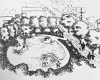
Creation of this small park at 420 Seventh Ave. in the Richmond District was before the era of the official mini-park, a federally subsidized program initiated in San Francisco in 1968, and creating it was a complicated business as it was a public-private project, a virtually unknown notion at the time but common today.

Growing up right across the street from Abraham Lincoln High School, Ungaretti did not really know all of the intricate details of the area until she began doing research and talking to people.
A link to photo of a 42′ by 38′ detailed wooden replica of the city of San Francisco as it was in 1940 in 158 pieces at a scale of 1 inch to 100 feet.
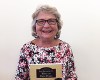
“When I visited San Francisco as a child, I fell in love with the city’s architecture and natural land preserves,” Proctor said. “When I completed my family’s genealogy, I began to seriously explore the West of Twin Peak’s history.”
San Francisco is always in the process of naming and renaming streets, to honor new heroes or outstanding citizens or to remove the names of those deemed unworthy by today’s standards.
Although much more information is available today than was in 1897, there is still more knowledge to be discovered as to the origins of the diverse street names in San Francisco.


 Richmond Review/Sunset Beacon