
By Noma Faingold
Martin Chapman, curator in charge of European Decorative Arts and Sculpture at the Fine Arts Museums of San Francisco (FAMSF), describes England’s Tudor dynasty, which only ruled for three generations (1485 to 1603), as “ambitious, ruthless, visionary and utterly magnificent.”
Sounds intriguing enough to bring the art exhibit, “The Tudors: Art and Majesty in Renaissance England,” to San Francisco’s Legion of Honor, June 24 to Sept. 24.
It is the third U.S. stop, and the only museum on the West Coast to mount the show, following its debut at the Metropolitan Museum of Art in New York City (Oct. 10, 2022-Jan. 8, 2023) and at the Cleveland Museum of Art (Feb. 26-May 14).
“It’s the first and only opportunity to see these magnificent works of art,” said Chapman. “You’ll probably never see them again.”
The Tudors used art as a way to present opulence and display power. Art also became a visual propaganda tool.
“It helped establish their authority,” Chapman said.
The exhibit has assembled paintings, precious jewels, rich tapestries and rare artifacts from around the world “to bring the Tudor dynasty vividly to life,” said Thomas P. Campbell, director and CEO of FAMSF.
It was Campbell’s idea to uniquely arrange the San Francisco exhibit in chronological order, by monarch (reflecting their tastes and personalities).
“It’s easier for people to understand. It also works best with the way our galleries are laid out,” Chapman said.
From King Henry VII’s seizing of the English throne in 1485, to the death of his granddaughter Queen Elizabeth I in 1603, the exhibition focuses on the evolution of the arts under the Tudors.
The Legion will have an additional 20 pieces in the show (exceeding the 90 displayed in Cleveland), including five works from the museum’s own collection. Chapman, who is originally from London and has been with FAMSF for 17 years, spent the last five years focused on bringing the Tudors exhibit here.
“That’s standard. But the pandemic did slow us down,” he said. “When you are dealing with loans from all over the world, it takes a lot of negotiation and diplomacy.”
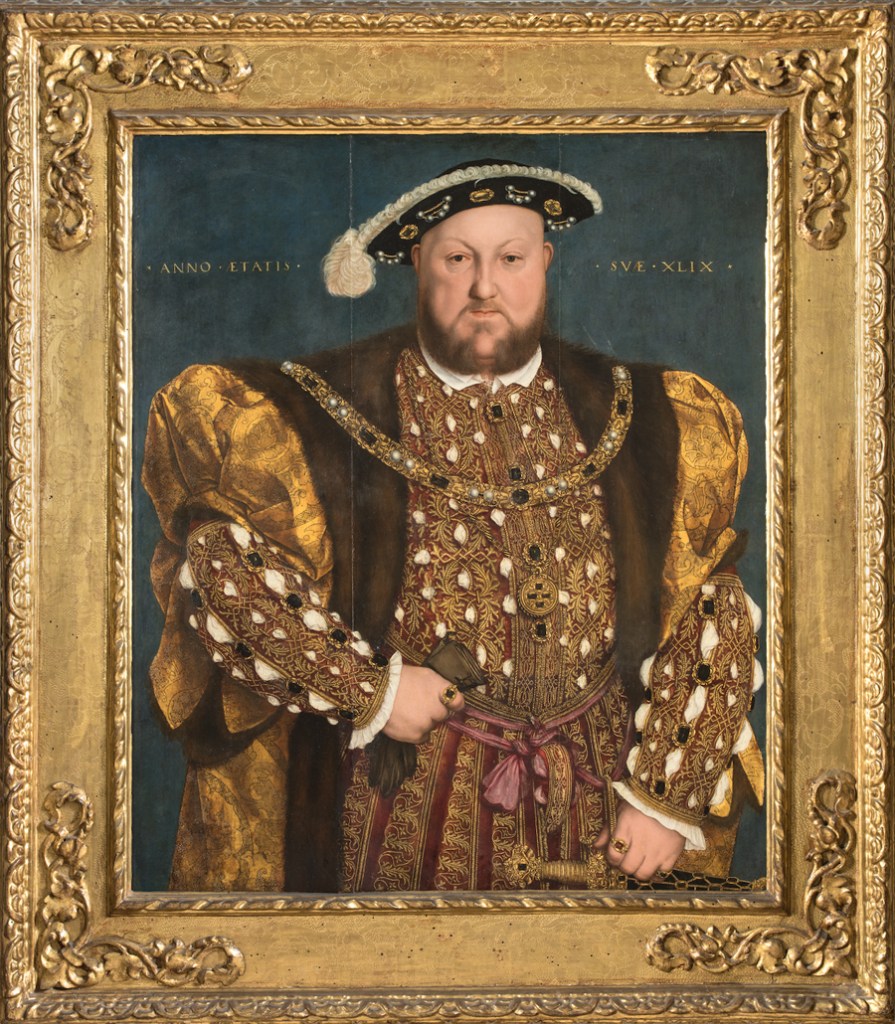
Among the most impressive pieces is an imposing, full-length portrait of Henry VIII by German painter Hans Holbein the Younger (one of the most successful portraitists of the 16th century), borrowed from the collection at the National Gallery of Ancient Art in Palazzo Barberini, Rome. “It shows a measure of strength,” Chapman said. “He’s in a gorgeous costume with slashed sleeves and jeweled rings on his fingers. It’s an image of power and magnificence.”
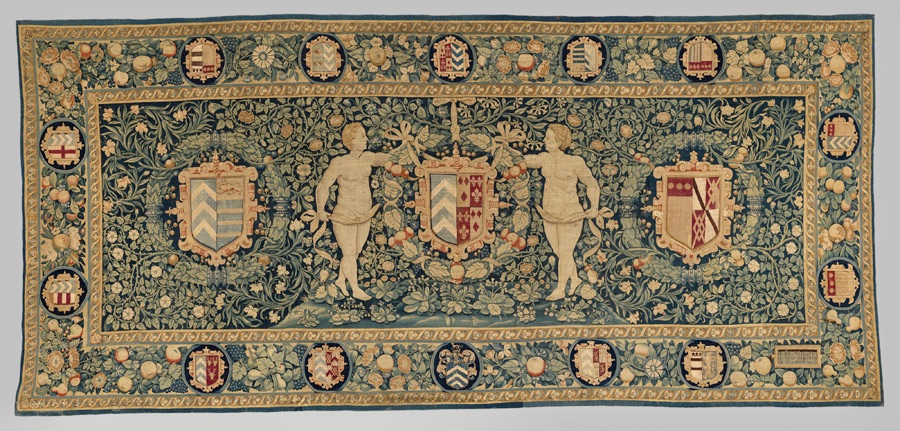
Tapestries were an important art form in the Tudor court, especially under Henry VIII (who owned 2,500). They were the most expensive art at the time. His many palaces were furnished with the creations. The Legion will have three tapestries represented. Woven with gold and silver thread, the sophisticated, vibrantly colored art adorning palace walls, “glistened by candlelight at night,” said Chapman, who has organized numerous exhibitions at FAMSF, including “Marie-Antoinette and the Petite Trianon at Versailles” (2007-08) and “East Meets West: Jewels of the Maharajas from The AI Thani Collection” (2018-19).
Another House of Tudor portrait (an engraving) by Crispijn de Passe the Elder, is of Elizabeth I, known as the “Virgin Queen,” who reigned over England and Ireland from 1533 until her death in 1603.
“She is shown as an ageless beauty,” Chapman said. “The pearls on her dress symbolize purity.”
Campbell is counting on the American fascination with the Tudor dynasty to expand from movies – like, “Elizabeth” (1998) and its sequel, “Elizabeth: The Golden Age” (2007), and the Showtime series, “The Tudors” (2007-2010) – to a museum audience.

“Few may be aware of the distinctive art and visual propaganda that was central to the splendor and drama of the Tudor court,” Campbell said.
“The Tudors: Art and Majesty in Renaissance England” will be on view from June 24 through Sept. 24, at the Legion of Honor, 100 34th Ave., San Francisco. Learn more at famsf.org/exhibitions/tudors.
Categories: Art


 Richmond Review/Sunset Beacon
1 reply »