
By Noma Faingold
I’m slightly embarrassed that I first discovered artist Takashi Murakami through his collaboration with luxury brand Louis Vuitton, which began in 2003, evolved and lasted through the summer of 2015. The colorful, whimsical makeover of the signature brown handbags, covered in little LV logos, were a craze among celebrities, LV collectors and your average young female working stiff with aspirational fashion goals.
I got to see that Murakami had much more going on when I went to a retrospective exhibit at the Brooklyn Museum in 2008. I was intrigued by his early work, which brought traditional Japanese techniques and subject matter into the fantastical world of pop culture. He elevated cartoon figures like his alter ego, Mr. DOB (a kind of anti-Mickey Mouse with his jagged teeth) to fine art.
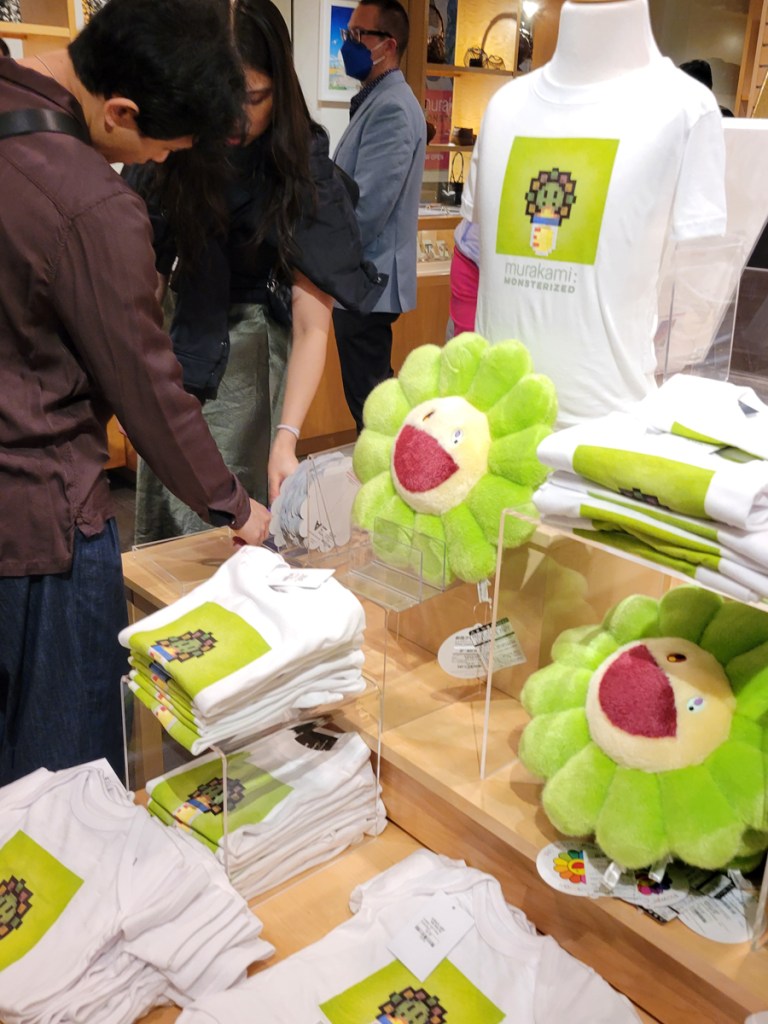
Conversely, Murakami, 61, has blurred the boundaries of high and low art. His newest exhibition at the Asian Art Museum (AAM) in San Francisco, called “Takashi Murakami: Unfamiliar People – Swelling of Monsterized Human Ego” (Sept. 15-Feb. 12, 2024), demonstrates that his 82-foot, super-detailed, story-telling painting, created especially for this – his first-ever Bay Area exhibition – is consumed alongside the instantly recognizable, multicolor smiling flower motif, which visitors rabidly purchase in many forms (including as a stuffy-style pillow) at the museum gift shop.

Of course, Murakami is not the first artist to democratize his work. Andy Warhol revolutionized merchandising his art for the masses decades ago. But Warhol’s approach often seemed cynical, like when he guest starred on the “Love Boat” television show and created a line of department store bedding.
Murakami seems to welcome the public into his world, meeting the people where they’re at. Some appreciate his forays into animae and avant garde video, or they discover him through his recent collaborations with emo pop phenom Billie Eilish.
“He really believes in creating a range of objects from $10 keychains to million-dollar paintings,” said AAM Senior Curator Laura Allen, who organized the exhibit. The show has 75 pieces (including sculptures), along with 12 new works. “He’s always been committed to spread his art that way.”
Five years in the making, bringing a Murakami exhibit to San Francisco is a coup for AAM.
“This is a really important show for the museum. It’s wide-ranging,” Allen said. “There’s something for everyone. It can reach a lot of people.”
Allen is proud of coming up with the monster concept.
“You can approach Murakami’s work in many different ways,” she said. “I thought monsters would be an accessible theme. It turned out to be a perfect theme for our times.”
The pandemic gave rise to uncertainty and isolation.
“Monsters represent the unknowable, our inner anxieties and fears,” Allen said.
The exhibition is not a downer, however. It combines Murakami’s signature show-stopping, cheerful weirdness with palatable social commentary.
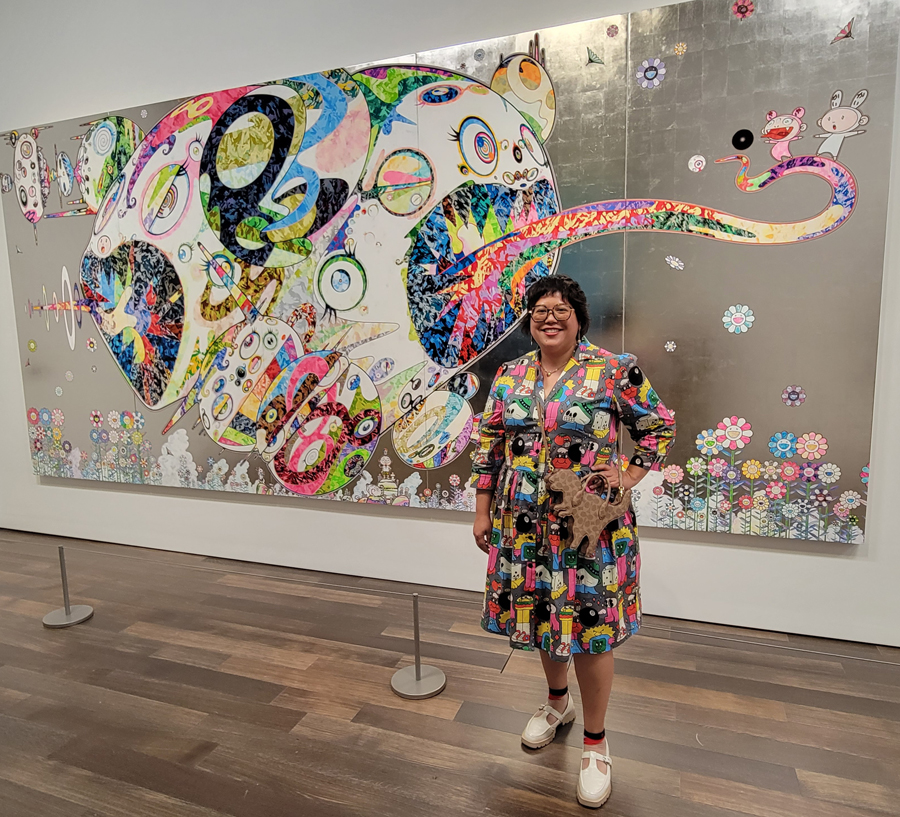
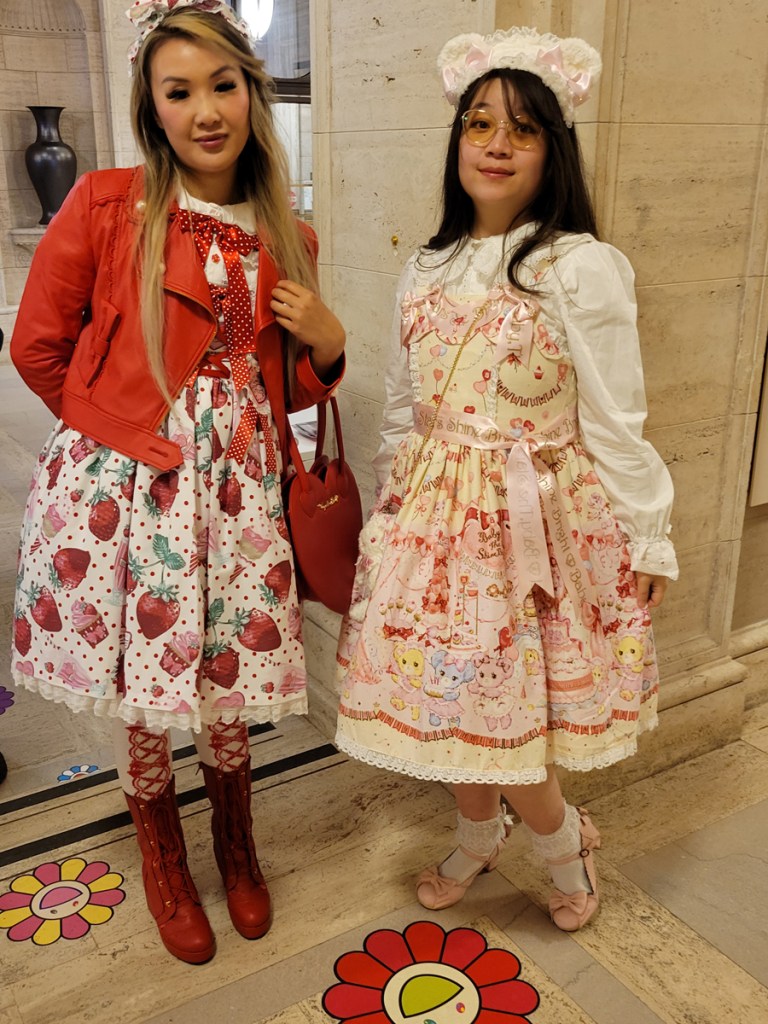
Some Murakami fans pay tribute to the artist by dressing up in colorful outfits.
In the final of seven galleries, the works reflect his reaction to how he saw people changing, as a result of the pandemic and perhaps the divisive political climate of the last several years. In particular, what Murakami saw on social media disturbed him.
“Some questionable opinions were emerging,” Allen said. “It was a very self-referential time. People’s swollen egos were taking over.”
In other words, Murakami asks us if we are the monsters.
“Takashi Murakami: Unfamiliar People – Swelling of Monsterized Human Ego,” is at San Francisco’s Asian Art Museum through Feb. 12, 2024. Tickets: asianart.org.
Noma Faingold is a writer and photographer who lives in Noe Valley. A native San Franciscan who grew up in the Sunset District, Faingold is a frequent contributor to the Richmond Review and Sunset Beacon newspapers, among others. She is obsessed with pop culture and the arts, especially film, theater and fashion.
Categories: Overtures and Undertows


 Richmond Review/Sunset Beacon