
By Thomas K. Pendergast
Local environmentalists are highlighting concerns about a proposal to light up the Botanical Garden in Golden Gate Park at night during the winter months and the impact this may have on plants and wildlife.
Bringing night lighting to the garden is the brainchild of the Gardens of Golden Gate Park (GGGP), a public-private partnership between the San Francisco Recreation and Park Department and the San Francisco Botanical Garden Society, which jointly operate the Conservatory of Flowers, Japanese Tea Garden and San Francisco Botanical Garden.
A request for proposals (RFP) issued on Oct. 12 “seeks to develop a high quality and unique winter lights installation … intended to drive members and visitation to the gardens after regular admission hours, from mid-November 2024 through early January 2025. The Gardens are also open to multi-year proposals.”
The deadline to submit proposals was Nov. 15 and, as of press time, the Gardens expect to select a proposal by Nov. 29.
“We received six proposals,” the GGGP’s Director of Advancement Brendan Lange said in an email. “The selection committee is reviewing the proposals and will make a decision and let the proposed partner know by Dec. 1.”
“The Gardens’ staff leadership team, in consultation with the Recreation and Park Department, decided to issue the RFP,” he said. “The partner selection will go to the nonprofit’s board on Nov. 30 and a more detailed plan and proposal at a later date. The Gardens’ staff leadership team voted unanimously to put out a request for proposal to learn more about a potential winter lights exhibit at the Gardens.”
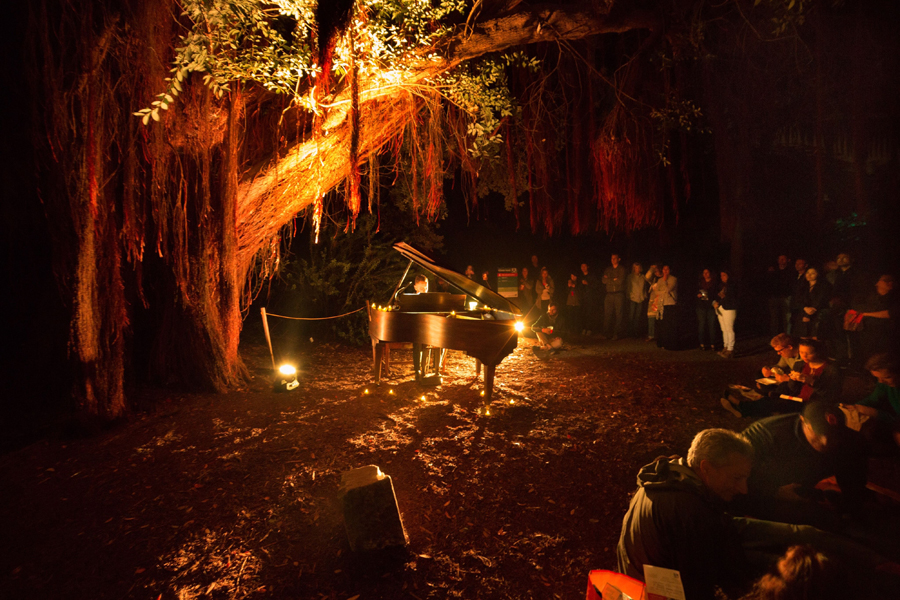
According to the RFP, GGGP and the selected “contract partner” will work to create “an iconic garden experience and memorable winter destination for San Francisco, the Bay Area and beyond. The contract partner will create an evening garden experience, illuminating existing plants and built elements along paved trails throughout the Garden. The responsive contract partner will collaboratively engage the Recreation and Park Department and the Gardens in the program design, and lead the installation, deinstallation and maintenance of the light activation through the run of the show.”
Negotiations with the contract partner will begin after GGGP finalizes the selection. Upon successful agreement to all terms of the contract, the potential partner’s proposal will be reviewed by the GGGP board of directors for approval, according to the RFP. If they determine that negotiations are not proceeding satisfactorily due to the fault of the selected respondent, GGGP may commence negotiations with another respondent or begin the selection process anew.
But several local environmentalists are crying foul over the impact that winter lighting may have on birds, plants and other wildlife using the space.
“Artificial lights do impact the timing of not just animals but plants,” said Whitney Grover, deputy director for the Golden Gate Bird Alliance. “The timing of their blooming, the timing of their loss of leaves and all of their other biological functions (are affected) and then that in turn goes all the way up through the ecosystem.
“Birds are impacted by having the timing of their migration affected, the routes of their migration affected and then the timing of their breeding; and so all of these things can have cumulative impacts on the animals.”
Grover suggested that if GGGP insists on doing this, they do things to minimize the impact.
“The Botanical Garden right now is a wonderful refuge for birds and wildlife from all the rest of the lights of the City,” Grover said. “And we know it’s just a small little patch in a big city that’s very heavily lit, but right now, because the garden closes at night, it’s a perfect little refuge for birds and other wildlife to not just be away from light impacts but also be away from humans at night.
“If the Garden is going to proceed with this, we ask that they turn off the lights as early in the evening as possible and keep them off through the rest of the night, only have them on for the opening hours of the exhibit and then turn them off no matter what,” she said.
The San Francisco Chapter of Sierra Club member Vicky Hoover is adamantly opposed to the plan.
“Excessive continued nighttime lighting hurts the natural rhythms of many wildlife and interferes with migration and other movements by numerous birds,” Hoover said. “And, at this time, shortly after the California state legislature passed (and the governor signed) SB-337, which codifies into law the governor’s earlier executive order making 30 by 30 (the goal of conserving 30% of our state’s lands and waters by 2030) of which program a significant auxiliary is to give better nature access to underserved urban communities and to enhance urban biodiversity – such extra park-lighting does neither of those things; in fact it sets us back.
“It is apparently a part of the City’s increasing efforts to rely on commercial ventures in parks; the world-renowned park that has the mission of bringing nature into the City is becoming little more than a cash cow,” Hoover said.
A Nov. 20 letter to the GGGP’s president, Sarah Ryan, was made public by San Franciscans for Urban Nature (SFUN), a self-described group of community members who support protecting nature in the City, expressing its disapproval.
“We are very concerned about the new RFP asking for proposals for the installation and operation of additional lighting, including a light show with sound, in either the San Francisco Botanical Garden, the Japanese Tea Garden or the Conservatory of Flowers,” the letter stated. “We request that you rescind this RFP.”
Among 20 individual concerns about the project listed in the letter were those related to timing and public input.
“The RFP was issued on Oct. 12, and the proposals had to be submitted to the GGGP by Nov. 15. This short timeline gives the public little time to react to this proposal, and in addition, gives respondents little time to come up with well-thought-out proposals, unless they were somehow made aware of the RFP before it was issued,” the letter states.
“This proposal has been created within the GGGP Board, but with no notice or hearing before the public. Does the public-private partnership structure of GGGP prevent the public from learning about and commenting in a timely manner on activities that will take place in one of San Francisco’s major parks?” SFUN said.
“The RFP states that the proposed projects must make money for the GGGP as well as for the Department of Recreation and Parks. Tickets are projected to cost between $28 and $40 per person. The minimum net revenue generated for the gardens must be at least $500,000. Half of all revenue will go to the Department of Recreation and Parks. At what point will making money overrule habitat protection?”
Categories: Golden Gate Park


 Richmond Review/Sunset Beacon
Yet more evidence that Park and Rec’s head Ginsburg’s main priority is monetizing Golden Gate Park. Who is going to attend this expensive light extravaganza? Not people from the far reaches of SF who can’t drive there nor take the limited muni service at night. Not low income residents. No, let’s make GGP into an amusement park for the young and affluent with expanded Outside Lands, light shows, etc while closing off free access for residents who must bear the burden.
LikeLiked by 1 person
“All species are impacted by light pollution. Flooding a nocturnal environment with artificial light destroys habitat, no less than bulldozing trees in a rainforest.” – Bettymaya Foott (quoted by Dark Sky International)
LikeLike