
By Klyde Java
On Oct. 5, the Legion of Honor opened “Mary Cassatt at Work,” a new retrospective exhibit detailing the life and work of American Impressionist painter Mary Cassatt. This is the first retrospective of Cassatt’s work in North America in 25 years. The Legion of Honor is the sole west coast venue. The exhibit was organized by the Philadelphia Museum of Art in conjunction with the Legion of Honor and the Fine Arts Museums of San Francisco.
The opening event, “A Conversation on Mary Cassatt at Work,” featured the Legion’s curator of European paintings, Dr. Emily Beeny, as well as art historian Dr. Nicole Georgopulos. The presentation was held in the museum’s Gunn Theater.
Born in 1844 in Allegheny, Pennsylvania to an upper-class family, Cassatt was admitted to the Pennsylvania Academy of the Fine Arts at the age of 15. Known by her family for her strong aspirations to become an artist, Cassatt moved to Paris to pursue her career and lived in France until she died in 1926. Cassatt’s family allowed her to have an art career on one stipulation set by her conscientious father.
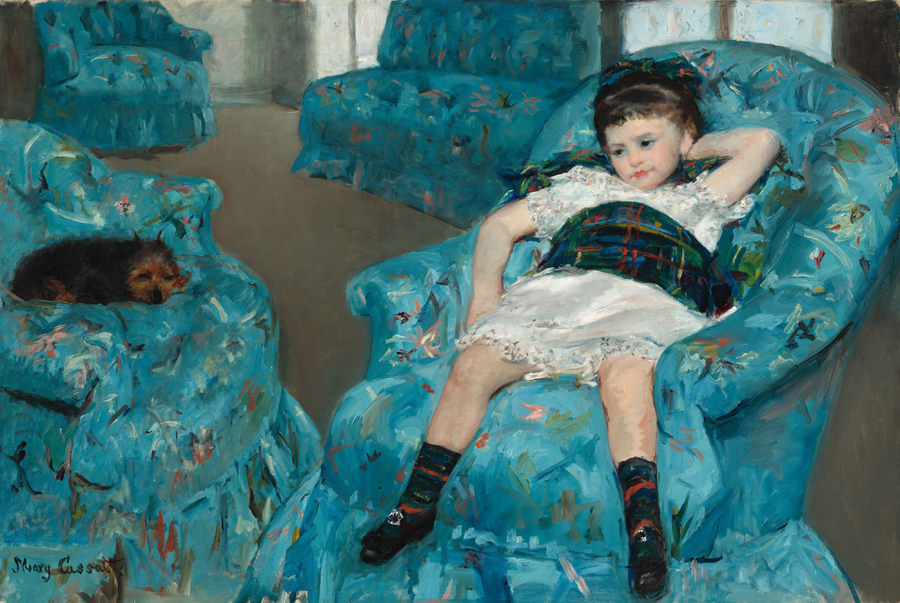
“An 1878 letter from (Cassatt’s) father, Robert, grants us insight into these terms as well as his daughter’s feelings about them. Quote, ‘I have said that the studio must at least support itself. That makes Mame (Mary) very uneasy,’” Georgopulos said.
But this financial restriction did not affect Cassatt’s creativity. It enhanced it.
She often used her siblings to model for her and portrayed the mundane activities of women living in the 19th century. Domestic scenes such as a mother coddling her child, or children playing, were common motifs throughout Cassatt’s work.
One such example can be found in “Maternal Caress” (1896) which portrays a tender moment between a mother and her infant. This ability to illustrate the beauty of domestic life is ubiquitous in Cassatt’s work.
Cassatt appeared to be a natural candidate to be a mother due to the content of her work, but she never bore a child, believing that a family would hinder her career, echoing a modern sentiment. Regardless of her lack of children, her bold depictions of motherly joy and free-spirited toddlers captured the hard but rewarding work of caretaking.
“Cassatt produced images of women’s work. By which I mean, knitting and needlepoint, bathing children and nursing infants that also testify to the work of the woman who made them,” Beeny said.
Despite being the only American to be exhibited along with the Impressionists, Cassatt’s place in art history can be summed up as overlooked. While her French contemporaries such as Edgar Degas and Édouard Manet were highly regarded, Cassatt herself remains an afterthought of the Impressionist movement. A persistent criticism of Cassatt’s work is the repetitive nature of her subject matter. But the supposed repetition of Cassatt is not a unique characteristic.
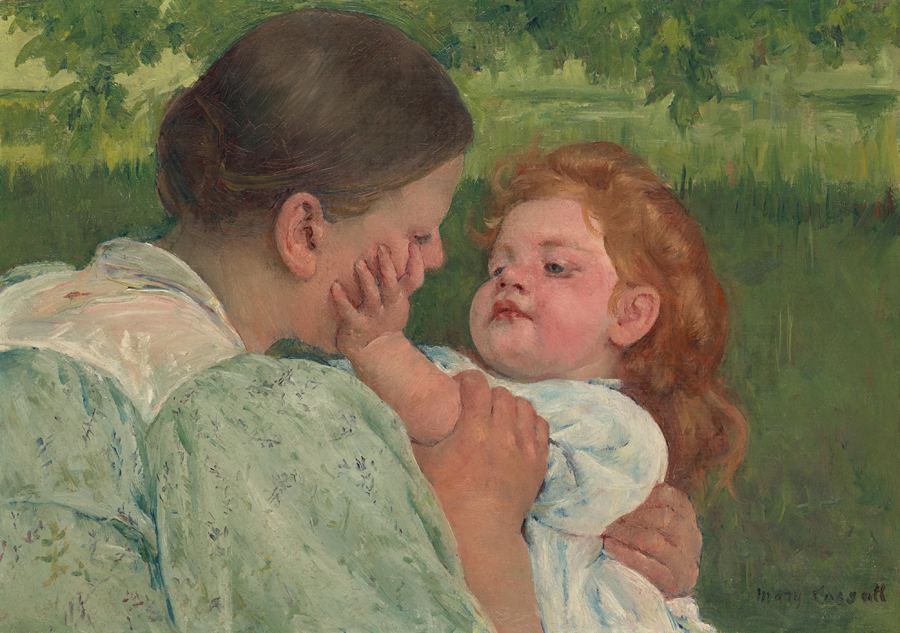
“Regarding her pairs and trios of mother, babies and children, we might do well to remember the endless Mount Sainte-Victoire landscapes of Cézanne and the recurring water lily ponds of Monet,” Beeny said.
Though Cassatt’s eyesight began to fade after the beginning of the 20th century, she continued to paint until her death.
What Cassatt can be remembered for was that she pushed herself to work, a rare sight in the 19th century.
“What I want is the freedom to work,” she wrote to her art dealer, Paul Durand-Ruel in an 1894 letter.
Cassatt’s ambition was emblematic of the archetype of the working woman. A colleague of the artist, Eliza Haldeman, remarked that she wanted to “paint better than the old masters.” The courage to surpass the well-established masters makes Cassatt a master herself.

“‘Mary Cassatt at Work’ invites us to consider how the question of work arises in myriad ways throughout the artist’s life and era and how that, in turn, allows us to reconsider her art historical legacy,” Georgopulos said.
“Mary Cassatt at Work” will be on display at the Legion of Honor through Jan. 26, 2025. The museum is located at 100 34th Ave. Learn more at famsf.org/exhibitions/mary-cassatt.
Categories: Art


 Richmond Review/Sunset Beacon